
Croatia
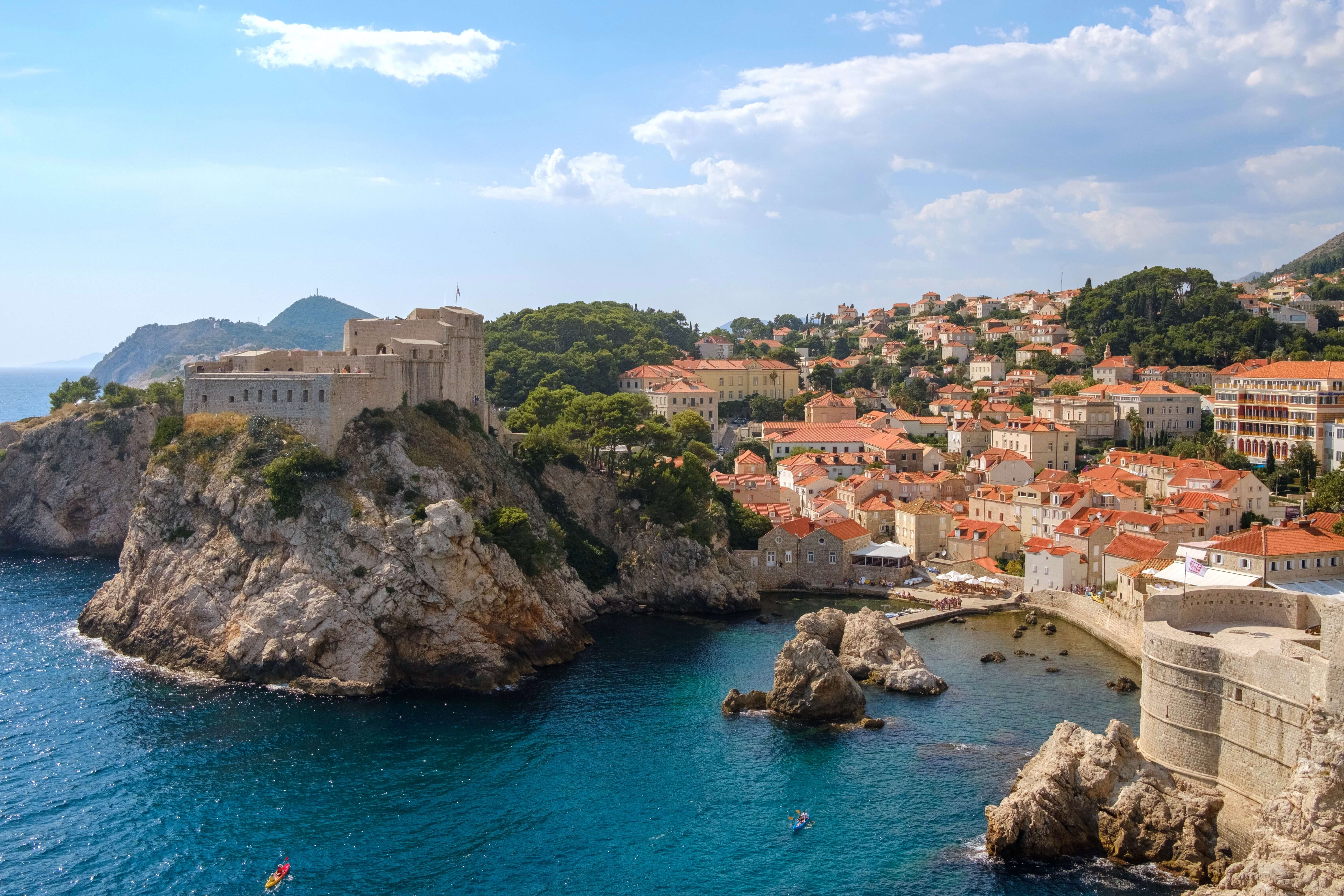
Croatia’s become a hotspot for remote talent. Old Adriatic vistas, looming fortresses, and favorable policies for remote workers make it a great spot—and if you’ve found someone in Croatia you’d like to hire, this page is for you. We’ll teach you how to hire talent in Croatia without stumbling into a months-long procession of paperwork and thousands in fees.
The following content is provided for general informational purposes only and does not constitute legal, tax, employment, or compliance advice. It does not reflect the views of, and is not endorsed or sponsored by, any sponsoring financial institution. Readers should consult qualified professionals before acting on any information herein
Country snapshot
CURRENCY
Kuna (HRK)
EMPLOYER TAXES
19.2%
PAYROLL FREQUENCY
Monthly
OFFICIAL LANGUAGE
Croatian
It’s the fastest way to hire globally
Hiring employees takes months, at the minimum. When you hire with Thera's locally-generated contracts, it’s a matter of days or weeks. This means you can hire the best talent, fast, without losing them to a hellish procession of paperwork.
It’s a lot cheaper
It costs just $0 to sign up for Thera, then $25 per month to hire your contractors with Thera. If you hired employees manually (or did contracting on your own), you’d likely be on the hook for thousands of dollars each month. Setting up an entity alone can cost tens of thousands of dollars.
It’s more flexible for you & your team
Can be less risky than hiring employees
Hiring employees is a bigger commitment, and can open you up to increased liabilities and regulations. When you hire contractors overseas, your biggest risk is misclassification—but laws surrounding contractor classification are often significantly more straightforward.
Some people want to be employees
The contractor life isn’t for everyone—some people want the security that being an employee often appears to provide. Though it’s rare, this does happen, and it’s one disadvantage of manage an all-contractor team.
You might not have as much control over your talent
Most countries’ contractor-employer relationship laws stipulate that the employer can’t set fixed working hours, among other things. These laws give contractors more freedom over how and when they do their work than an employee would have. In reality, however, most contractors are willing & able to work on the company’s schedule—it’s a matter of setting expectations beforehand.
No matter where you’re based out of, we can tell you one thing: Croatia has different labor laws than your home country (well, unless your home country is Croatia, of course). If you don’t do things right, you’ll be putting your company at the risk of fines—and risk losing the talent you brought onboard.
Hire talent as contractors
Hire talent as employees
If you’ve read up until this point, you’ll know that it’s easier, cheaper, and more flexible to hire contractors in Croatia than employees. Still, there are valid reasons why you might want to hire employees instead. The content below is for you—we’ll cover employer taxes and obligations in Croatia
Employer tax
Health
Paid Time Off (PTO)
PTO is calculated by the:
- Employees receive 20 days of paid time off.
Public Holidays
There are 14 public holidays.
Sick Days
The duration of sick leave entitlement provided to workers is dependent on how long they have been employed by their employer:
- Sick leave is paid by the employer for the first 42 days.
- The amount paid depends on the collective agreement, but cannot be less than 70% of the employee’s average salary over previous 6 months.
- After 42 days, employer pays, but receives reimbursement from the Croatian Health Insurance Fund (HZZO).
Maternity Leave
Mandatory paid maternity leave starts 28 days (or 45 days, if necessary) before the due date for the child and goes until 70 days after birth. After that, the mother may continue with paid maternity leave until the baby is six months old, but it is not mandatory.
In all, paid maternity leave goes for 208 days.
Paternity Leave
In special circumstances, the father can take over the mother’s mandatory leave if the mother is unable to care for the child.
After the 70th day after birth, the mother can transfer the remainder of the leave to the father.
Parental Leave
Each parent has the right to paid parental leave for each child, usable until the child turns 8. It goes for 8 months (for the first and second-born child) or 30 months (for twins, third and each subsequent child).
Both parents use parental leave for 4 or 15 months, but if only one parent takes it, it goes for 6 or 30 months.
Other Leave
None.
Marriage Leave
None.
Bereavement Leave
None.
Termination Process
Employers can terminate a fix term contract by giving the following reasons – business, personal or worker’s’ misconduct. It requires notice and a written explanation for the termination. If the reason is misconduct, a warning needs to be given and the employee gets a chance to explain actions.
Severance is paid, and all statutory obligations, such as paid time off, are compensated.
Notice Period
The notice period in Croatia is:
2 weeks for employees with a year of service
6 weeks for employees with two years of service
8 weeks for employees with five years of service
10 weeks for employees with 10 years of service
12 weeks for employees with over 20 years of service
Add 2 weeks for an employee over 50. Add four weeks for an employee over 55.
Severance Pay
An employee with two or more years of service with a company has the right to severance pay in the event of termination. Minimum severance is one-third of the regular monthly pay per year at the company.
Probation Period
The probation period cannot be longer than one year.
Working Hours
Full Time employment is considered 40 hours weekly – however can be extended to 50, and if agreed to in a collective agreement up to 60.
Overtime
Employees generally cannot work more than 180 hours overtime annually (unless agreed to in collective agreement in which case the maximum is 250 hours).
Overtime work is paid at a higher rate, though the government does not specify how much extra.
%5B1%5D.avif)
Run your global workforce on autopilot with Thera
Book a demo to get started.